
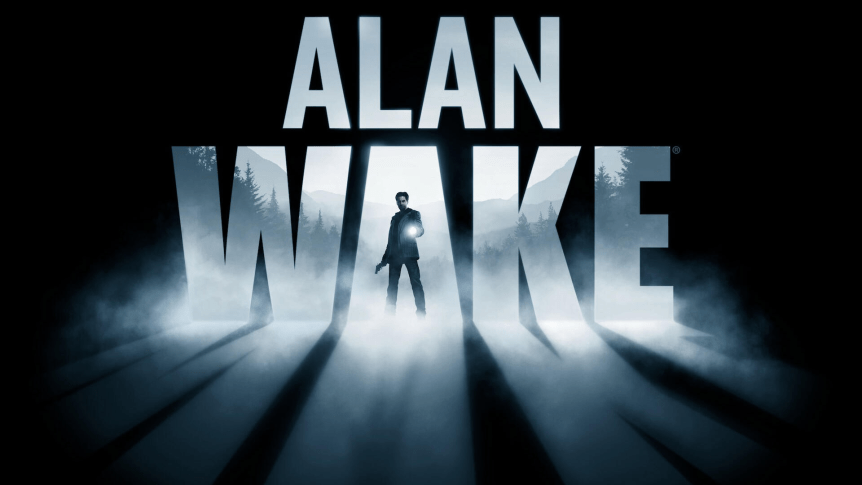
- Title: Alan Wake
- Year: 2012 (originally released in 2010)
- Platform: Windows (via Steam; played on Steam Deck)
- Also available for Windows (via Epic Games Store, GOG, and Microsoft Store) & Xbox 360
- Developer: Remedy Entertainment & Nitro Games
- Publisher: Remedy Entertainment
- Played: Base Story and DLC episodes beaten on Normal Difficulty, 39/67 Steam achievements unlocked
Notes: Alan Wake is a Steam Deck Verified title. Also, this review is for the original version of the game and not the remaster released in 2021.
Alan Wake is an action-adventure game developed by Remedy Entertainment, originally published by Microsoft in 2010 as an Xbox 360 exclusive. The game has since been released on various platforms and Remedy has retroactively established it as the first title in a shared universe with a later title of theirs, Control. Out of interest in the sequel, Alan Wake II, I finally decided to play the original game. And while the game does have its fair share of flaws, it remains a memorable adventure that’s worth checking out.
Alan Wake‘s campaign is presented as a six-episode thriller TV series. The game’s titular protagonist (Matthew Poretta) is a best-selling crime author from New York City who has been on hiatus for two years due to writer’s block. Per the advice of his agent and best friend Barry Wheeler, Alan and his wife Alice (Brett Madden) travel to the rural town of Bright Falls, Washington for a vacation. On the first night of the trip, Alice gets pulled into the local lake by a mysterious force known as the Dark Presence and Alan begins to encounter the Taken, people and objects controlled by the Dark Presence. As Alan searches for Alice and deals with the Taken, he notices that his experiences are playing out exactly like the events of “Departure”, a horror novel that he has no recollection of writing.
The story is Alan Wake’s strongest element. It’s very good at instilling intrigue into its mysteries and providing the player with moments that leave you hanging and wanting more. This is best demonstrated in the cliffhanger endings of each episode, in which the game’s co-writers seemingly know precisely which moment would be the most exciting or most shocking to leave off on. The game does have a surprisingly amount of lore but it’s all pretty digestible and it does tie well into what’s going on in the game. My only complaint with the story is that the TV series format feels unnecessary or underdeveloped. The only times the game ever feels like a TV show are the recap segments at the beginning of each episode and the licensed music that plays at the end as if credits are supposed to roll (and to Remedy’s credit, the team chose very fitting songs for the game).
Regarding the characters, Alan in particular is a solid protagonist for the game. At times, Alan can be rude, aggressive, or stubborn. Conversely, he proves to be a rather selfless person; he’s willing to go to great lengths to find and rescue Alice and he grows concerned at how his writing is affecting Bright Falls. I wouldn’t call Alan complex but he’s certainly a very human character, someone whom the player can grow attached to as they play through the game. The supporting cast is more static in nature but there are a couple that stand out. Barry is effective as Alan’s companion in the game, providing some decent quips in otherwise eerie or tense situations with either his dialogue or his absurd plot armor that Alan had presumably written for him. There’s also the Anderson brothers, Tor (Lloyd Foyd) and Odin (Cliff Carpenter), two crazy old men and former members of a small-time rock band who somehow know exactly what’s going. These two are a huge joy that it’s honestly a shame that they’re only in the game for a couple of scenes. The only characters I would call a dud are most of the antagonists that Alan runs into. Without flavor text found in the game or expanded universe media, it’s hard to know what the deal is with these characters.
Unfortunately, the voice acting is a bit hit or miss. None of the actors sounds miscast but there are times where their delivery leaves a little to be desired. Probably because Alan is the most prominent voice in the game, you especially notice this issue with Matthew Poretta’s performance as the character. I really like Poretta’s work in later Remedy games and in this game, he mostly does a good job, most notably with Alan’s narration or inner monologue. But there are times where he could’ve really used another take. Maybe it’s the direction. Maybe there wasn’t a lot of time for recording takes. Whatever the case may be, the results aren’t the best.
Alan Wake has you take control of its titular protagonist from a third person perspective. While there are more story-driven, non-combative segments set during the day, much of the game has Alan navigating Bright Falls at night with a flashlight and a small assortment of weaponry. Often, Alan must defend himself against the Taken. Usually, the Taken comes in the form of possessed humans armed with melee weapons though you can alternatively face possessed birds and inanimate objects.
Gameplay primarily revolves around the concept of light. Enemies are protected by the darkness and they are therefore impervious to damage. Alan’s flashlight doubles as an aiming reticule and you point it towards an enemy to weaken its “shield” with light. With enough exposure, the enemy loses their shield and you’re then free to kill them with a regular firearm such as a revolver, shotgun, or rifle. While simply aiming the flashlight will gradually drain away the shield, you ideally want to “boost” the strength of Alan’s flashlight to expedite the process. This comes at the cost of draining the flashlight’s battery. Once the flashlight is out of power, you have to wait for it recharge or insert a fresh new battery to instantly get some energy back.
The gunplay mixed in with the flashlight is unusual and they can take some getting used to but these mechanics do have their appeal. There’s something tense about trying to whittle down an enemy’s shadowy shield as they try to get closer to you and it can be relieving when they’re finally vulnerable and you can barrage them with a bunch of lead. The flashlight doubling as the aiming reticle is a cheeky and immersive touch and it makes the transition from blinding the enemy to shooting them very seamless. My one gripe with the shooting is the camera. Alan Wake has a dynamic camera system where it automatically positions from either Alan’s left or right depending on where the camera is going. If you turn the camera left, it’ll position at Alan’s left and the same goes with his right. It’s a neat idea on paper but I frankly found it off putting. You can manually switch perspectives but that sometimes leads to you fighting with the camera.
Other than the flashlight, the game conveys its emphasis on light in a couple of other ways. Checkpoints are often distinguished by a streetlight that doubles as a safe haven for you to regain health and stock up on resources. Generators or work lights can be activated to create additional lights that provide Alan some form of cover. Environmental hazards that you can use to your advantage come in the form of loose electrical wires and pyrotechnic canisters. I think my favorite use of light however is all the themed weaponry found in the game. Alan can carry a flare gun as well as flares and flashbangs to help ward off or kill enemies in an AoE. I just love how because of the importance of light, Alan Wake treats these items that aren’t traditionally used offensively as the real heavy hitters. Normally in a video game, flashbangs are useful for confusing your opponent but here, it is the equivalent of a frag grenade. Meanwhile, a freaking flare gun is unironically the strongest firearm in the game, stronger than any of the conventional firearms Alan can wield.
While the story and mechanics in Alan Wake are solid, the game isn’t always fun to play, due to its level design. Visually, the levels are perfectly fine. The rural setting of Bright Falls combined with the nighttime skybox and some source of light makes for some really atmospheric vistas that suit the tone and plot of the game. That said, these areas are empty and way larger than they need to be and they’re a huge slog to progress through. There is a behind the scenes reason for this. Apparently, Alan Wake was originally intended to be an open world game. Remedy eventually scrapped this in favor of a more linear structure but they opted to stick with whatever assets they’ve already created in order to get the game done. While I understand if Remedy got themselves in some sort of sunk-cost fallacy, these large maps create a couple of overarching problems for the game. Often, the objective is reaching a certain location and half and hour after that objective is first given, I find myself asking how Alan still hasn’t reached the place. Any time Alan has to go from Point A to B, the trek to Point B is horribly convoluted and long winded and the game literally depicts that entire trek for no good reason.
Remedy primarily tries to justify the size and length of these levels by having you fight the same enemies over and over again. These fights quickly begin to blur and the few that are actually memorable feel few and far between from each other. And because the combat gets so repetitive, you start to notice some serious cracks in it. Weakening things with a light can feel sluggish. Enemies have a cheap tendency of blindsiding Alan for a free hit and Alan’s only option at that point is to dodge as no one programmed a melee attack for him. You could run away from an encounter and the game does let you do this as safe havens causes any enemies chasing you to despawn. However, that’s easier said than done because Alan has the stamina of a professional writer so he gets exhausted very quickly and wasting stamina means Alan can’t dodge for a period of time.
By far the most egregious remnant of the open world structure is the vehicle sections. As ridiculous as it sounds, there are points in the game where Alan can drive around in a car until the game forces you to travel by foot again. One feature with the car that can be fun is using the high beams to weaken enemies so that you can then run them over. But in most vehicle sections, all you really need to do is just drive to the objective. They feel like such an afterthought that they really should’ve been cut from the final version of the game.
Alan Wake’s PC version includes two “specials” that were originally released as DLC: “The Signal” and “The Writer”. These episodes provide a follow up on what happens to Alan after the end of the base campaign. These specials don’t advantage the story a whole lot but I still enjoyed them for providing a deeper look into Alan’s psyche and the supernatural elements of the setting. Akin to a clip show reusing old footage, much of the assets in the specials are recycled from the base campaign. To Remedy’s credit, they manage to rearrange and modify them in creative ways to give the specials an eerie and uncanny atmosphere. These episodes also have some cool mechanics. I particularly dig the ability to shine a light on some text to obtain resources or manipulate the environment. That only appears in the base campaign very briefly so it’s neat to see it expanded upon in the DLC.
It’s worth noting that the DLC episodes have a notable spike in difficulty compared to the base story. These have some of the toughest encounters found in the game and ammo is generally scarcer in these specials than in the first six episodes. There are even a couple of sections where enemies infinitely respawn so you pretty much have to run to your objective but again, that’s easier said than done as this game is the most physical activity Alan has done in his life. The difficulty dials down a little bit during “The Writer” but there are still some chokepoints that’ll require some amount of skill and/or luck. I don’t want to be too harsh because, without spoiling, some of these encounters make very creative use of the mechanics. But since the base story got so exhausting, it does feel frustrating to see the DLC ramp up the difficulty.
Alan Wake is an action-adventure game that perhaps overstays its welcome. On average, you can expect to take 10-14 hours with a full playthrough (including the DLC) and frankly, I feel the game should’ve been half that length. There are occasions where I really wish the game would progress already and by the end of it, I was getting tired fighting the same crap over and over again. That all said, the game can be a rather riveting experience, thanks in part to its story, and it’s still a good entry point into Remedy’s shared universe.
Score: 7/10
Pros (+): Memorable plot and characters, quirky and charming utilization of the main gimmick, solid mechanics on paper.
Cons (-): Extremely repetitive, game takes way longer to beat than it should.
 Xenodude Scribbles
One thought on “Alan Wake (PC) – Review”